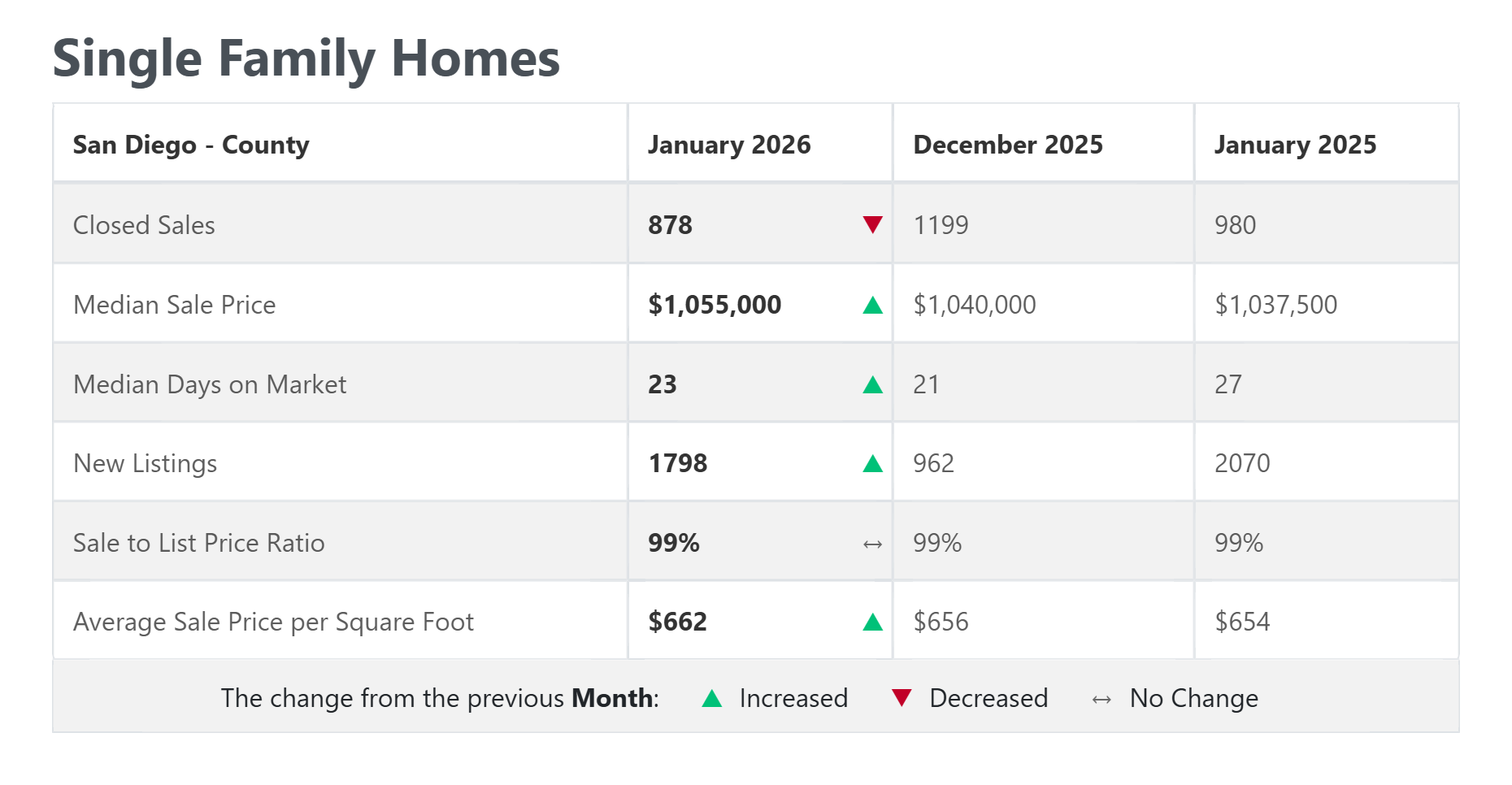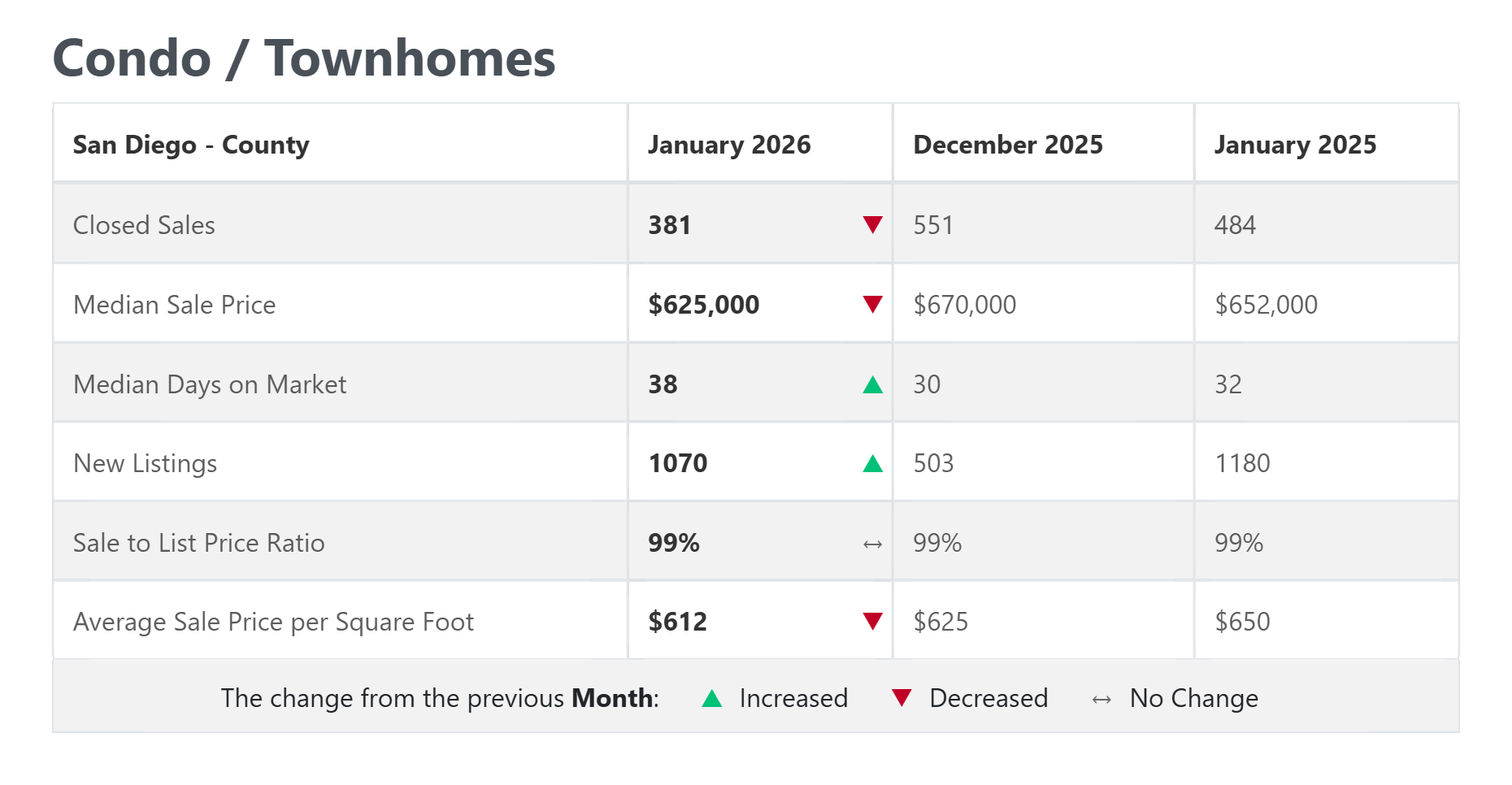
January 2026: Houses vs. Condos (Last 5 Years) |
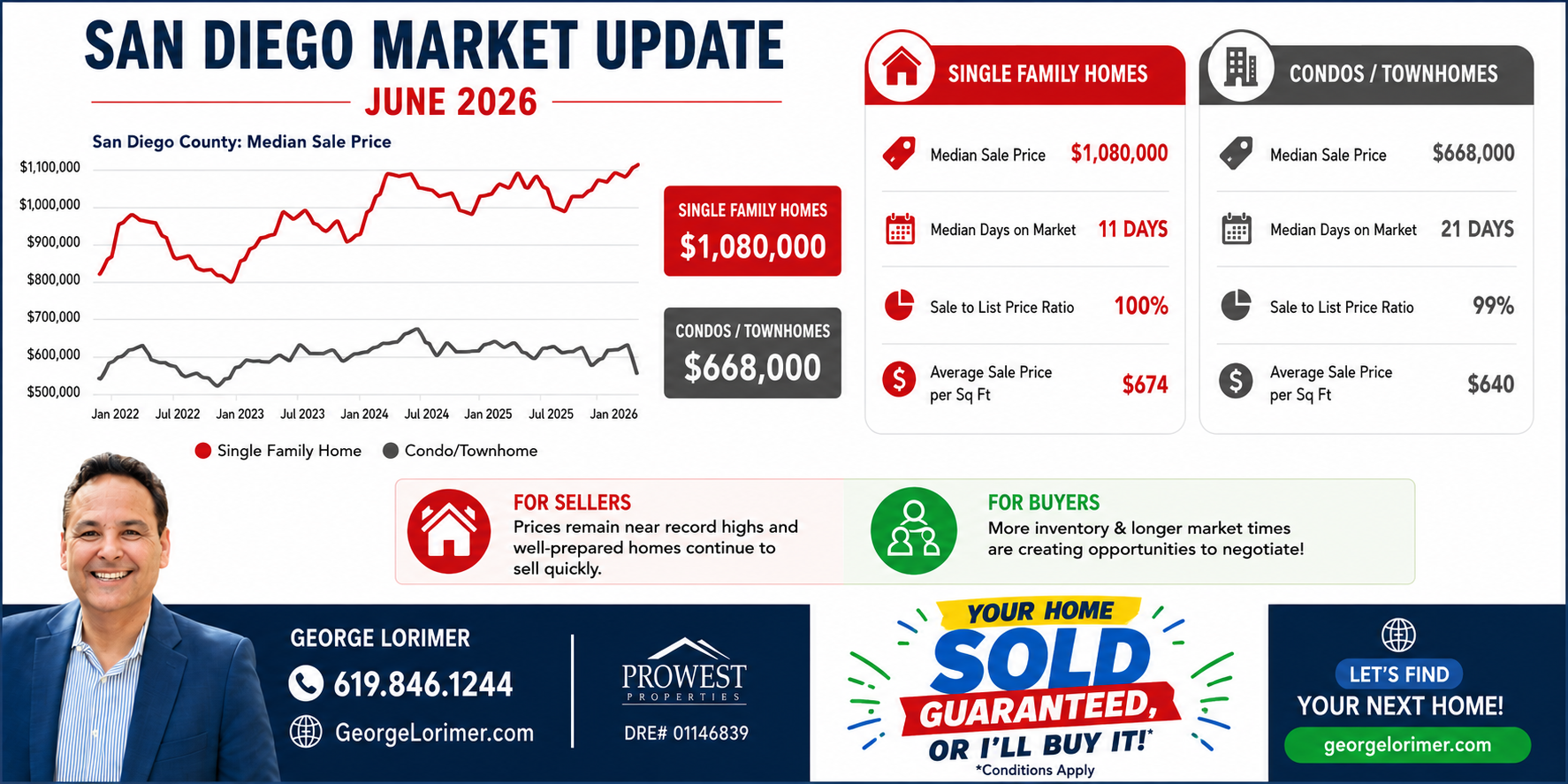
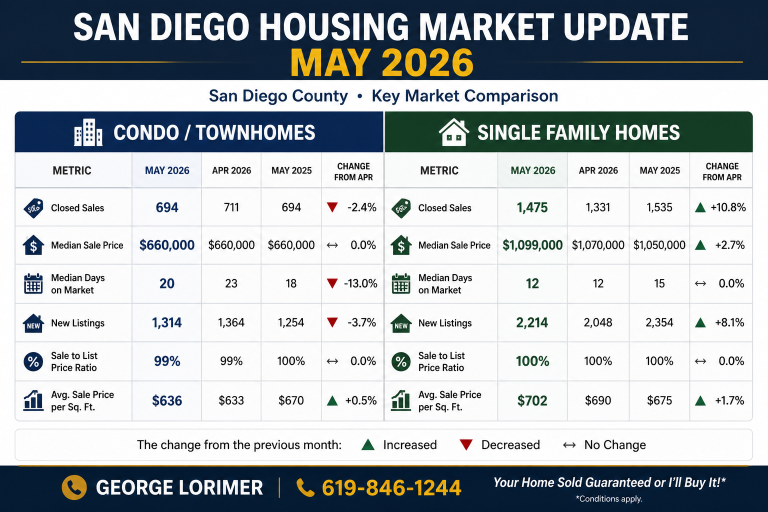
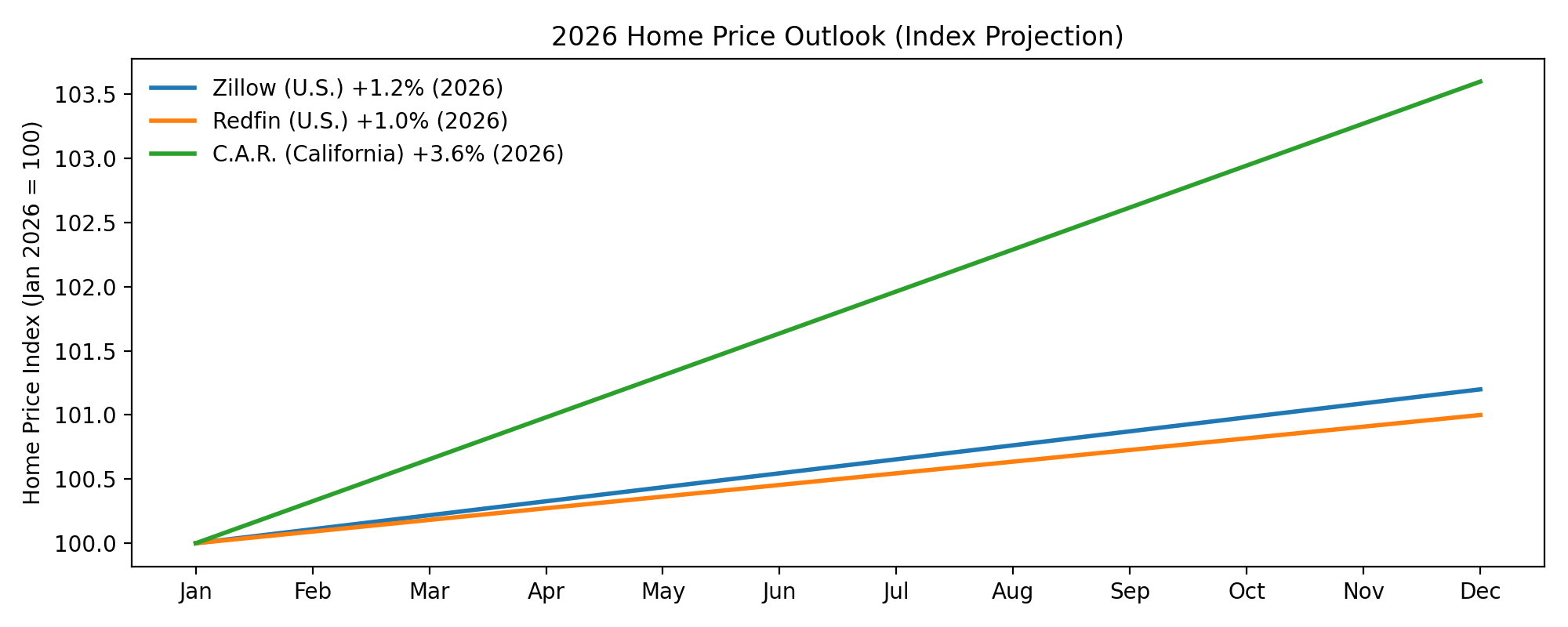
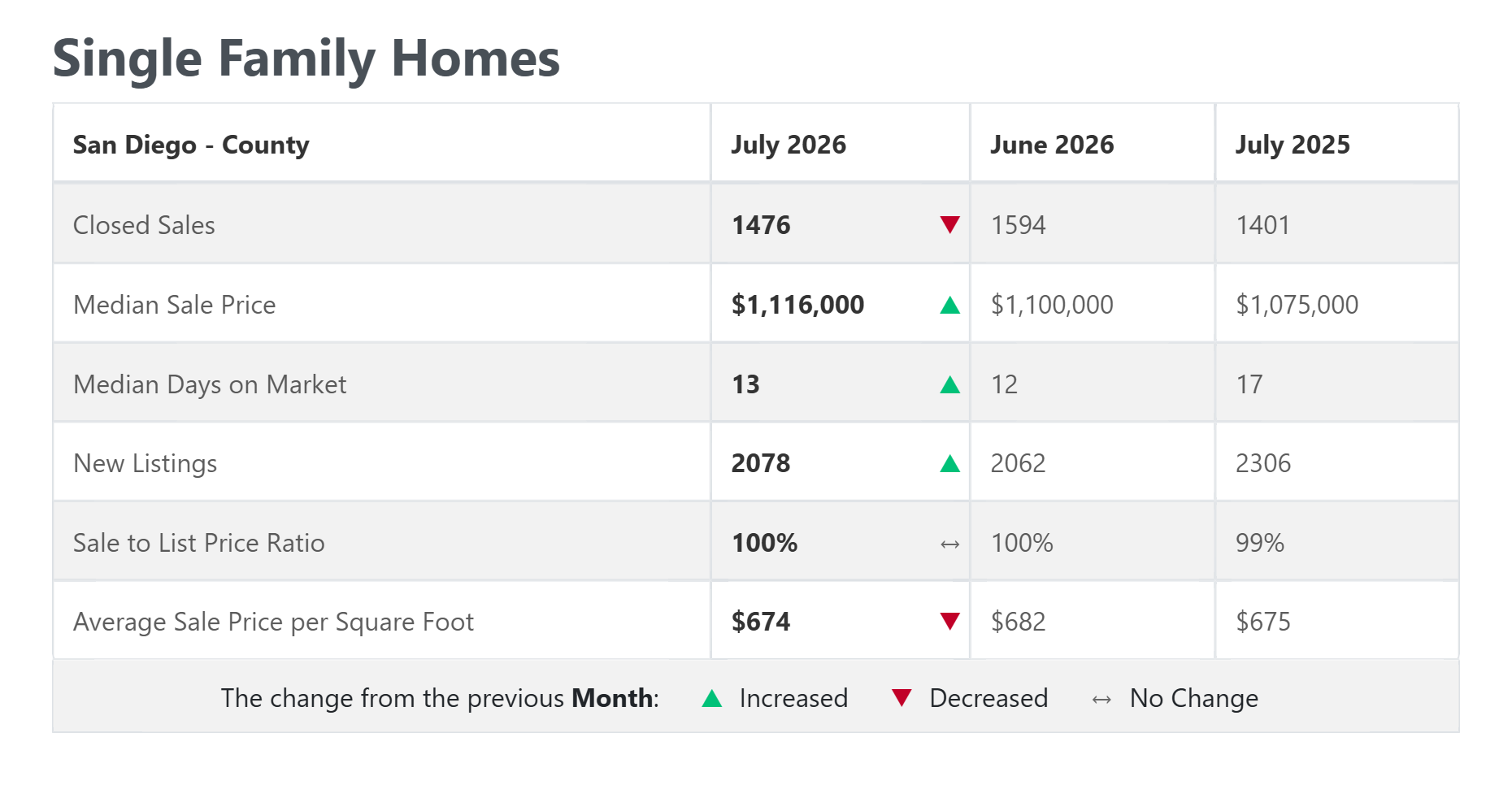
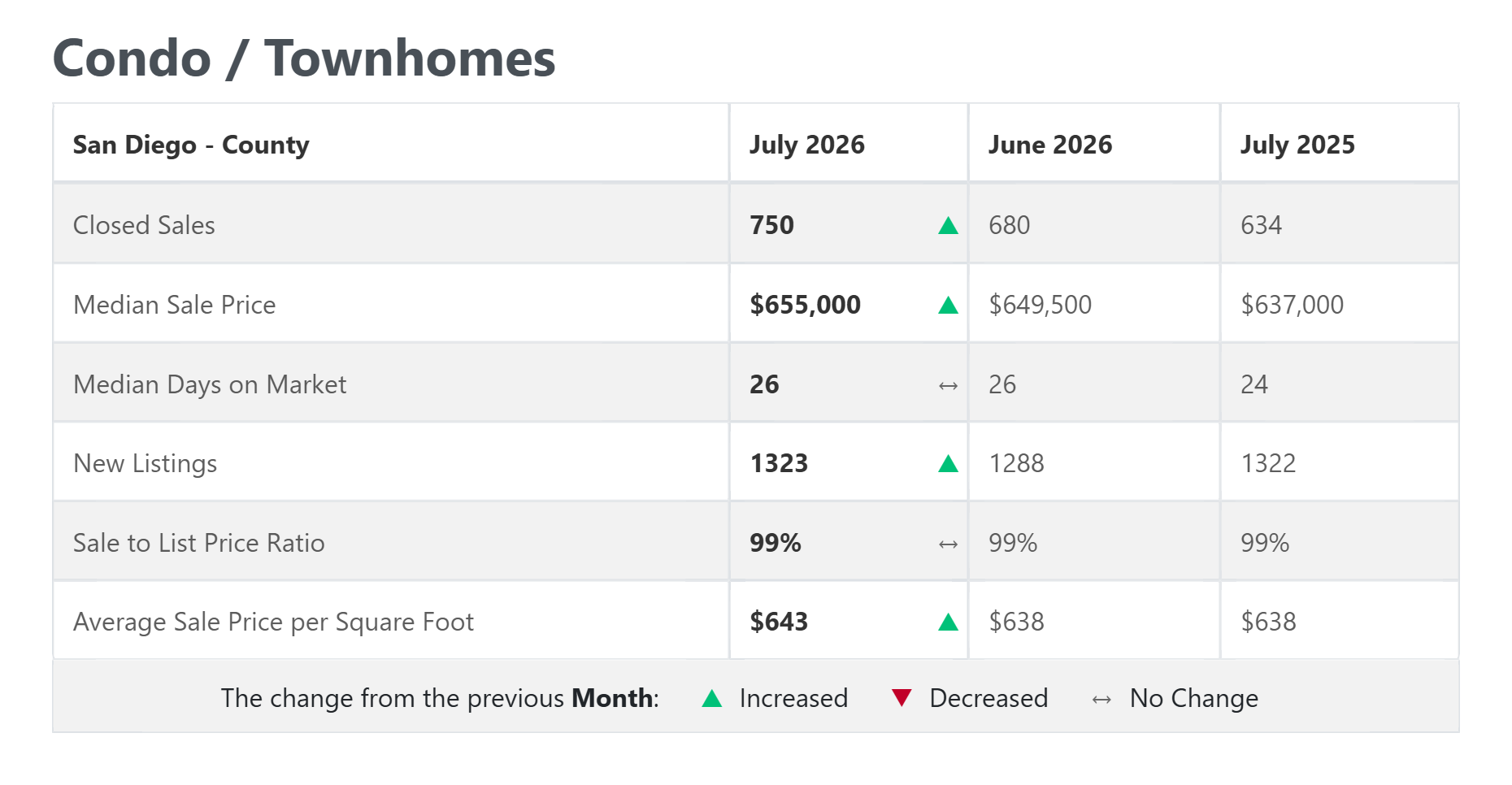
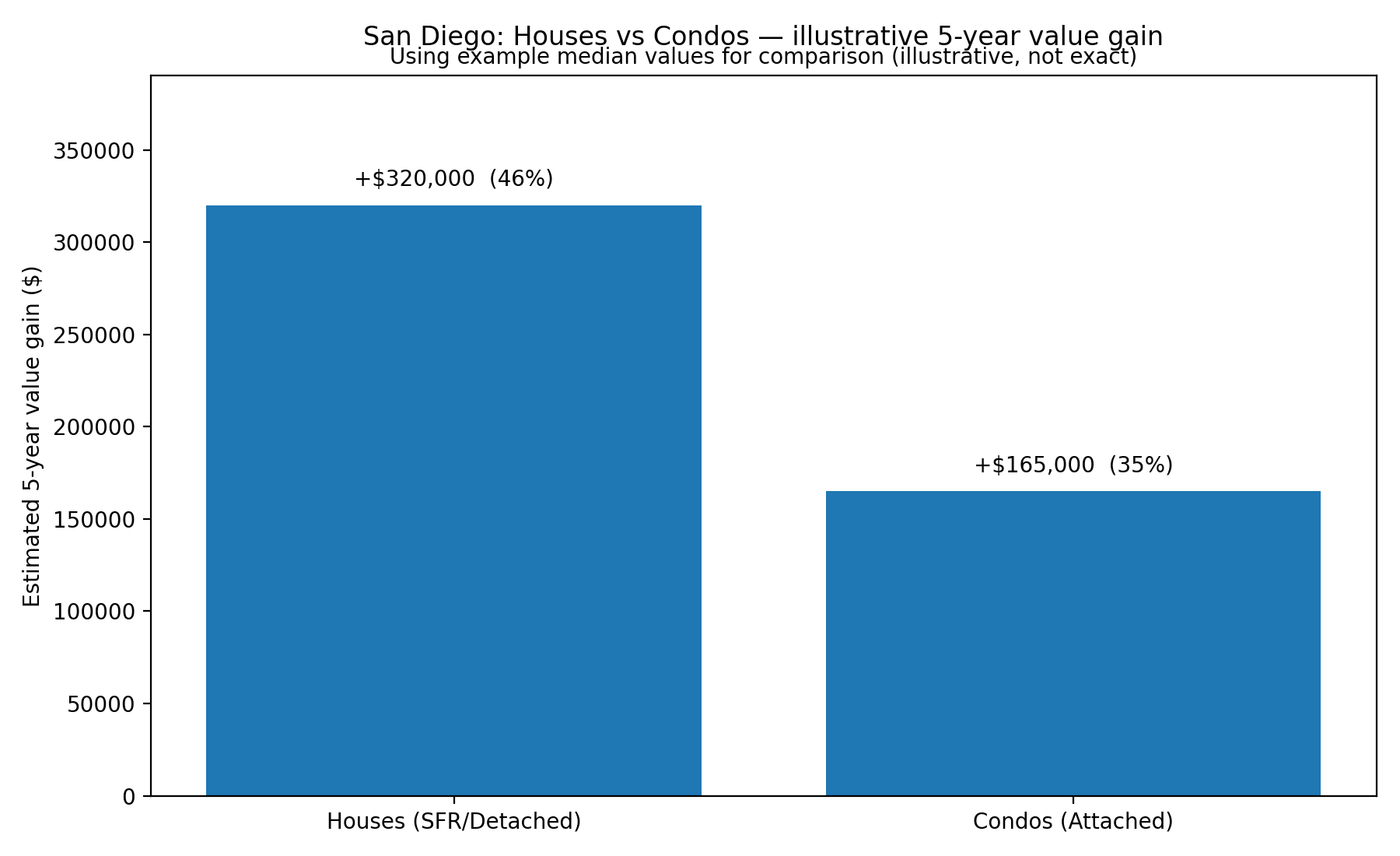
| These charts show how San Diego housing performed across a full cycle — low rates, rapid appreciation, rising rates, and today’s selective buyers. Both gained value, but the path was very different. |
San Diego Houses — 5-Year Trend |
| Houses benefited from land scarcity, broader buyer demand, and fewer recurring costs — helping values hold up better during market shifts. |
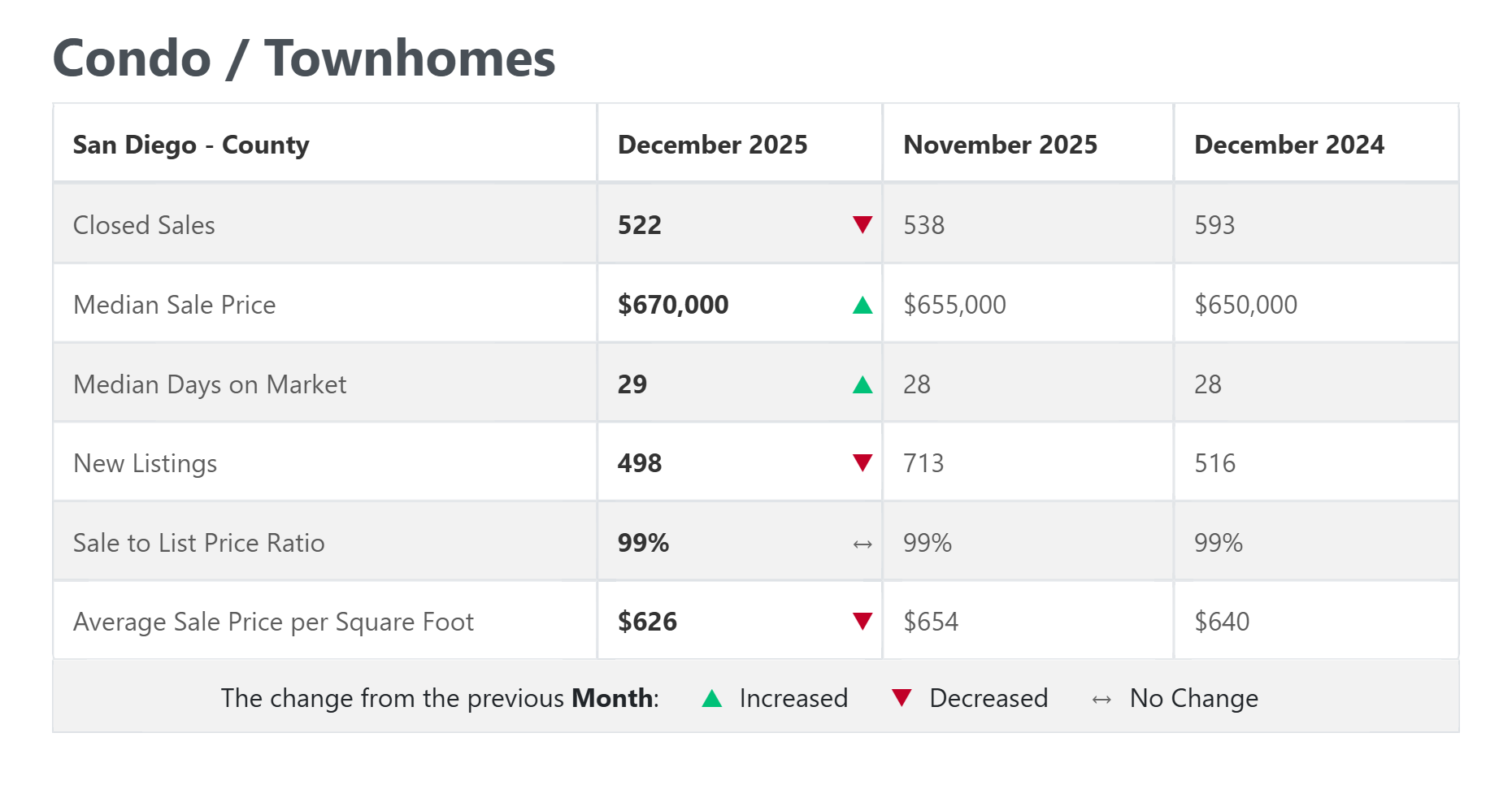
San Diego Condos — 5-Year Trend |
| Condos still appreciated, but pricing was more sensitive to rates, HOA dues, insurance costs, and building-specific risks — making selection critical in 2026. |
| Takeaway: Appreciation alone isn’t the full story. The best investment depends on what you buy, where you buy, and how you exit. For a personalized plan, call or text 619-846-1244. |
How To Get Top Dollar Without Losing The Deal —
How to price, position, and negotiate for the best outcome while keeping the buyer (and the closing) on track.
Read More »
How Interest Rates Really Affect Your Buying Power —
See how even small rate changes can shift affordability, monthly payments, and buyer demand in today’s market.
Read More »
Beyond The Mortgage: What It Really Costs To Own A Home —
From taxes and insurance to repairs, maintenance, and surprise expenses, this guide breaks down the real costs of homeownership.
Read More »
Summary
Every seller wants the highest price—but pushing too hard can cause your deal to fall apart. Getting top dollar without losing the buyer requires balance, timing, and a smart strategy. This report walks you through the key tactics to maximize your sale price while still closing smoothly. Learn how to price, negotiate, and position your home so it draws strong offers that actually lead to a successful sale.
The dream scenario for every home seller? A fast sale at top dollar with minimal hassle. But that doesn’t happen by accident—it requires skillful pricing, smart staging, and sharp negotiation. Many sellers lose great offers by being inflexible, too aggressive, or unprepared. Here’s how to walk the line and come out ahead.
Price Strategically—Not Emotionally
Top dollar doesn’t mean the highest number you can dream up—it means the most the market is willing to pay. Overpricing turns away serious buyers, while underpricing can leave money on the table. Use a comparative market analysis (CMA), local trends, and your agent’s advice to set a price that draws interest and builds momentum.
Attract Competition, Don’t Chase ItA competitively priced home with broad appeal can spark multiple offers, which drives the price up naturally. Listing too high narrows your buyer pool and reduces the likelihood of competition. Remember: the more buyers see your home, the more likely you’ll get a strong offer.
Nail the PresentationHomes that show well sell for more. Declutter, clean deeply, and consider light staging to highlight your home’s best features. Bright lighting, fresh paint, and neutral tones can create the emotional connection that makes buyers bid higher.
Offer Incentives That Don’t Cost You MuchSometimes offering a flexible closing date, a home warranty, or including appliances can sweeten the deal without reducing the sale price. These small perks can set your listing apart and help close the deal when buyers are on the fence.
Be Smart in NegotiationsTop dollar doesn’t mean refusing to budge. Be prepared to negotiate—and focus on the net value of the offer. A slightly lower price with fewer contingencies, a faster close, or stronger financing may be more valuable than a high price with complications.
Evaluate More Than Just PriceDon’t fixate on the offer price alone. Consider:
A “clean” offer that’s slightly lower may be far better than a risky high offer with lots of strings attached.
Respond Quickly to Serious InterestDelaying negotiations can cool off hot buyers. When you receive a good offer, act fast. Counter if needed, but avoid dragging it out unnecessarily. Sellers who respond quickly signal that they’re serious and cooperative—qualities that buyers appreciate.
Avoid the Pitfalls of Over-NegotiatingPushing for too much—extra days, extra concessions, higher deposits—can frustrate buyers and derail a deal. Work with your agent to craft a counteroffer that’s strong but fair. The goal is a win-win outcome that keeps the buyer engaged.
Prepare for the AppraisalIf the buyer is financing the home, the deal is subject to a lender’s appraisal. If the appraisal comes in low, you may need to negotiate again. Provide a list of recent upgrades and a copy of your CMA to help justify the price. Be ready with a plan in case the appraisal falls short.
Keep Emotions in CheckRemember, selling a home is a business decision. It’s easy to take negotiations personally or feel insulted by low offers. Stay calm, focused, and strategic. Your agent is your buffer—use their experience to avoid emotional decision-making.
Conclusion:
You can absolutely get top dollar for your home—but you need a game plan. The key is to attract serious buyers, make a great impression, and negotiate with confidence. By staying focused on the big picture and working with a skilled agent, you’ll get the price you deserve—without losing the deal in the process.
Summary
Interest rates are one of the biggest factors affecting how much home you can afford, but most buyers and sellers overlook their full impact. This report explains how even small rate changes can drastically shift monthly payments, buyer demand, and overall affordability. Whether you’re entering the market or planning a move, understanding interest rates gives you a powerful edge.
It’s easy to focus on list prices and offers when shopping for a home, but what really determines your monthly cost (and your approval odds) is the interest rate. Interest rates fluctuate based on inflation, economic trends, and monetary policy and they directly affect buyer affordability, seller pricing, and market momentum.
How Interest Rates Work
When you take out a mortgage, you’re borrowing money from a lender. The interest rate is the cost of that borrowing, expressed as a percentage of the loan amount.
Example:
Loan amount: $400,000
Rate: 4.5%
Monthly principal & interest: ~$2,027
At 6.5%, that same loan costs ~$2,528/month. That’s a $500/month difference, or $180,000+ over the life of the loan.
Your lender calculates your debt-to-income ratio (DTI) when deciding how much you can borrow. Higher rates mean higher payments, which may lower the price range you qualify for.
Higher rates can:
Lower rates do the opposite; giving you more flexibility and access to better properties.
Why It Matters for SellersInterest rates don’t just affect buyers but shape the entire market.
When rates rise:
When rates fall:
Understanding buyer psychology in response to rates helps sellers set smarter prices and anticipate offer activity.
How to Estimate the ImpactUse a mortgage calculator to test different rates on the same loan amount. The results show just how much a 0.5%–1% shift can affect your payment and whether you’re stretching your budget.
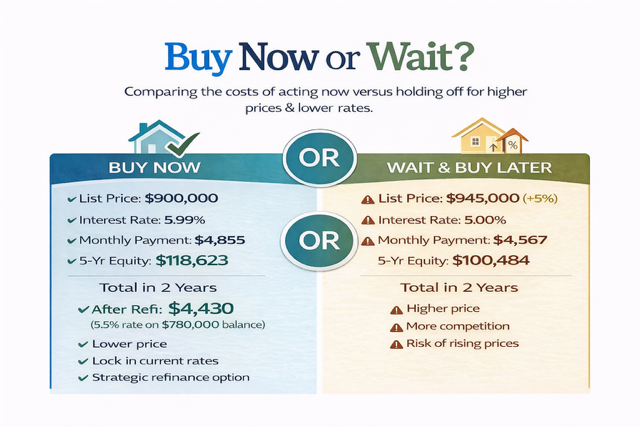
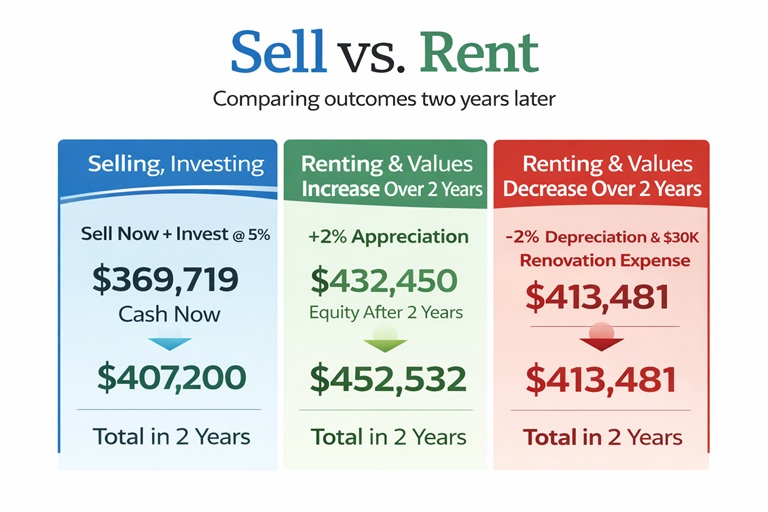
Rate vs. Price: Which Matters More?Many buyers ask: “Should I wait for prices to drop?” But often, waiting means risking higher rates. A lower rate with a slightly higher price can still result in a lower monthly cost and more equity over time.
Tips to Maximize Your Buying PowerWatch updates from:
Rates often move in response to inflation reports, employment numbers, and global economic events.
In real estate, interest rates are just as important as property prices. Even a slight rate change can reshape your entire budget and influence what homes you can consider. Whether you’re buying or selling, keeping an eye on rates helps you make smarter, faster, more informed decisions.

Summary
The true cost of owning a home goes well beyond your mortgage. From taxes and insurance to repairs, maintenance, and lifestyle changes, there's a lot to consider. This report covers all the real-world costs you'll face as a homeowner and how to prepare for them. It's essential reading for buyers who want to avoid surprises and enjoy stress-free homeownership.
When budgeting for a new home, most buyers focus on the mortgage. But homeownership brings a whole category of costs that extend far beyond that monthly payment. From taxes and insurance to maintenance, repairs, and even lifestyle changes, owning a home comes with responsibilities and expenses that renters don't face. This guide reveals the true cost of homeownership, helping you plan better and avoid surprises.

1. Property TaxesProperty taxes are due annually or semi-annually, based on your home's assessed value and local tax rates. They can range from a few hundred dollars a year to tens of thousands, depending on where you live. These taxes often increase over time, especially if your home's value goes up. Many buyers pay them through escrow, bundled into their monthly mortgage payment, but you're still responsible for the full amount.
2. Homeowners InsuranceLenders require homeowners insurance to protect your property from disasters, theft, and liability. Premiums vary based on your location, the home's age and construction, and your coverage choices. Expect to pay anywhere from $500 to $2,500 per year, or more in areas prone to wildfires, hurricanes, or flooding. Optional extras like earthquake or flood insurance can raise costs significantly.
3. Private Mortgage Insurance (PMI)If your down payment is less than 20% on a conventional loan, you'll likely have to pay PMI. This protects the lender, not you, in case you default. PMI usually costs 0.3â1.5% of your loan amount per year. You may be able to cancel it once you build 20% equity.
4. Utilities and ServicesAs a homeowner, you'll take on full responsibility for electricity, water, natural gas, trash removal, internet, and possibly septic or well maintenance. Utilities typically cost $200â$600+ per month and fluctuate by season.
5. Maintenance and RepairsExperts recommend setting aside 1â3% of your home's value annually for maintenance. Thatâs $3,000â$9,000 per year on a $300,000 home. Some years are quiet; others bring major replacements.
6. Lawn, Landscaping, and Snow RemovalYard care, lawn maintenance, and snow removal can cost $100â$300+ per month depending on property size and season. HOA fees may include some services.
7. Homeowners Association (HOA) FeesHOA fees range from $50 to $500+ per month and typically cover shared amenities and community upkeep.
8. Appliances and FurnitureNew homeowners often need to purchase or replace appliances and furniture. Budget $3,000â$10,000 depending on quality and needs.
9. Renovations and UpgradesEven minor upgrades can cost thousands, while major renovations like kitchens or bathrooms can cost tens of thousands.
10. Emergency Fund for the UnexpectedUnexpected repairs happen. Financial planners recommend $5,000â$10,000 in accessible savings for home-related emergencies.
11. Pest Control and Routine InspectionsRoutine inspections and pest control can cost $150â$400 per visit but help prevent costly long-term damage.
12. Security and Smart Home SystemsSecurity systems often require $200â$1,000 upfront and $10â$50 per month for monitoring.
Conclusion:
Owning a home is deeply rewarding, but it comes with expenses far beyond the mortgage. Buyers who plan for the full picture enjoy the benefits of ownership without financial stress. Plan smart now, and your home will be a source of comfortânot concern.
2026 San Diego Housing What Buyers and Sellers are Doing
If buying or selling a home in San Diego is even on your radar in 2026, here’s the honest update I’m seeing every day — not the headlines. Buyers want lower mortgage rates, fewer bidding wars, and homes that actually feel like good deals. Sellers want to know if now is the window to sell before more inventory shows up. Here’s the truth: there is no perfect rate and no perfect year. The people who win are the ones who move with a plan — not hope. Online estimates miss what actually drives value in San Diego — condition, layout, upgrades, views, and micro-location. Homes on the same street can vary by hundreds of thousands of dollars. If you want real numbers — or a clear buy or sell plan for 2026 — call or text me directly at 619-846-1244. Helpful resources: P.S. The biggest mistake I’m seeing in 2026 is people waiting for “better conditions” that may never line up. If you want to see what’s actually available right now — including homes not on Zillow — start here before competition picks up.
|
Houses vs. Condos in San Diego: Which Has Been the Better Investment (Last 5 Years)?
|
2026-san-diego-home-buyers-sellers-frustrated
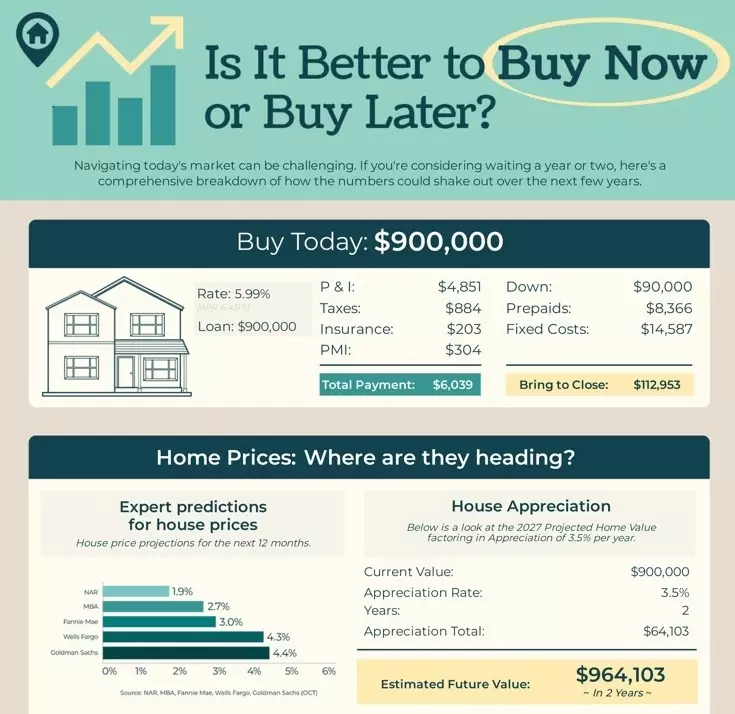
Buyers want prices to come down. Sellers want prices to go up. Everyone wants mortgage rates under 6%. Sound familiar? Here’s the part that actually matters: mortgage rates are about 1% lower than last year, and that’s already changing what’s possible—especially for buyers under $1 million. Start here (most popular right now): See what’s available under $1M in San Diego This isn’t headlines or predictions—I’m seeing this daily in real contracts. Some buyers are getting options and leverage again, but only if they know where to look. If selling is even a possibility, the smartest first step is real numbers—not guesses from Zillow. You can see your true value and cash-offer options here: Value and Cash Offers. Waiting for “perfect” usually costs more than moving forward with a plan. If you want help sorting this out quickly, call or text me at 619-846-1244. I’ll give you straight answers and real options. George Lorimer Your Home Sold Guaranteed, or I’ll Buy It* *Conditions apply, ProWest Properties, DRE #01146839?
|
Surprising San Diego Home Trends I See in Person, Not on Zillow
|
2026 San Diego Housing Outlook — What Buyers and Sellers Should Know Now
|
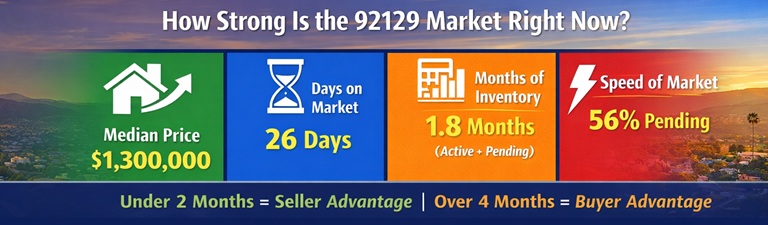
Rancho Peñasquitos & Torrey Highlands Homes 92129 Homes
Fast market snapshot (last 6 months as of Dec 19, 2025). If you want the full spreadsheet (every address + list/sold history), text “92129 DATA” to 619-846-1244. Most Torrey Highlands & newer RP sellers focus here (last 6 months). Want model-by-model detail? Text “92129 DATA” to 619-846-1244. Rancho Peñasquitos overall — sold last 6 months. Thinking of selling? Text your address & timeline to 619-846-1244. Source: SDMLS / ShowingTime ProWest Properties • DRE #01146839 • Your Home Sold Guaranteed or I’ll Buy It* • *Conditions apply I’ve lived and worked in San Diego for over 20 years, helping homeowners make smart decisions about when to sell, when to wait, and how to maximize value without pressure. Real estate is personal — that’s how I treat it. George Lorimer • ProWest Properties • DRE #01146839
|
San Diego home and short sales
|
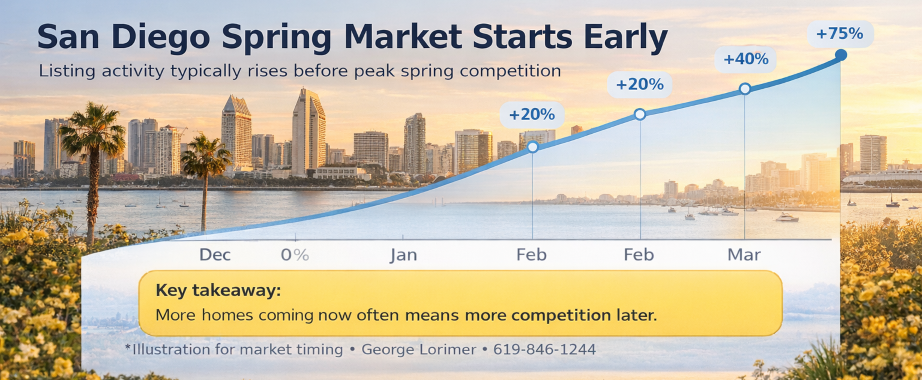
San Diego’s Best “Quiet Window” to Plan a 2026 Move (Free 10-Minute Strategy Call)
|
How Long Does It Take to Sell a San Diego Home?
If you’re thinking about selling in 2026, here’s the truth: you don’t have to rush out after you sell. You can sell now and move later with a rent-back, or sell very fast if timing matters. Timeline example used below starts January 10, 2026. Your exact timing depends on pricing, condition, neighborhood, and strategy. You get paid first and move later — ideal if you’re finishing the school year or planning a summer move. Single-family homes typically sell faster than condos. Downtown and HOA-heavy condos often take longer, while well-priced houses in strong school districts move quicker. Want a clear plan for your timeline? George Lorimer • ProWest Properties • DRE #01146839
|
Buy a San Diego Home With an Under-6% Mortgage — Guaranteed
The Fed cut rates by 0.25% on December 10, 2025. Good news — but mortgage rates don’t drop automatically. They’re driven by the bond market. The smart move is learning how to secure the lowest rate available right now through negotiation. Call or text 619-846-1244 for a 10-minute strategy call. Want a free, customized report based on your price range and off-market homes? Call or text George at 619-846-1244. 30-year fixed rates are hovering in the low-6% range. FHA and VA can be lower. Sub-6% is achievable when offers are structured correctly. How do you guarantee an under-6% mortgage? I negotiate it with the seller as part of your offer. If they don’t accept it, my lender and I pay the loan discount so you still get the lower rate. Simple — just work with us on your purchase. George Lorimer • 619-846-1244 George Lorimer • ProWest Properties • DRE #01146839
|
San Diego 4-Step Plan to Buy or Sell a Home Without Stress
Most people don’t need more “advice.” They need a simple plan that reduces risk, prevents surprises, and gets them to the finish line. Here’s the exact 4-step process my team uses to help buyers and sellers move fast, stay protected, and avoid drama. Prefer a quick call? Call/Text George Lorimer at 619-846-1244 for a 10-minute strategy session. If the video doesn’t load, view it here: https://www.youtube.com/shorts/AuwjkgTXOxw?feature=share Buyers worry about overpaying or missing out. Sellers worry about pricing wrong, getting lowballed, dealing with repairs and showings, or buying the next home before the current one sells. The solution isn’t hope — it’s a clear process that removes risk. We start with clarity: updated home value, realistic net, buying power, neighborhoods, and what homes are actually available (including unlisted opportunities). This is where you stop spinning and start making smart moves. Most people only see one path: list it and hope, or buy and compete. We lay out multiple paths so you can choose what fits you: cash offer options, multiple investor offers competing, buy-before-you-sell solutions, and the right timing strategy for your goals. Once you choose the best path, my team handles the details: pricing, prep guidance, marketing, negotiation, inspections, and timelines — with one goal: get you the result you want with the least stress and the least wasted time. This is where most agents disappear — and where we do the opposite. We troubleshoot, protect your deal, and keep you informed. If plans change or something comes up, you’ve got an experienced team and real safeguards behind you. Bottom line: I have your back. If you’re thinking about buying or selling in the next 30–90 days, don’t wing it. Get the numbers and your best options first. George Lorimer • ProWest Properties • DRE #01146839
|
Meet George Lorimer San Diego broker and realtor
|
How to avoid the first mistake that San Diego home sellers makeIf you’ve been wondering what's going on in the San Diego housing market, here’s a quick reality check: The reason I tell you this is that there's an opportunity to buy at a good deal in this market. And if you're thinking of selling, don't price your home speculatively. For example, these speculative sellers say things like, "If I could get this price, I'd sell." (usually "their price" is higher than today's market value). For buyers, it becomes clear that the price may or may not have been based on today's statistics. For sellers, it's evident that unless you price it right, you may not sell. Here's my simple 3-step strategy that's helped over 1,000 sellers. 1) Determine that you are committed to selling. 2) Then price your home against competing listings, the homes buyers are comparing yours to. 3) Listen to feedback from the market and buyers and implement changes. Do this right, and you create urgency, competition, and the best chance of selling for top dollar. Call or text me, George, at 619-846-1244 to get your Complimentary Home Seller Report. All the best, George Lorimer Secret selling options that other agents don't offer.
|
San Diego County Housing Report: Go for Gold, No Waiting
|